A finely executed 19th-century steel engraving illustrating The Twa Dogs, Robert Burns’ celebrated poem of social satire. After a composition by J. M. Wright and engraved by E. Scriven, the scene portrays what appears to be a rent or debt collection within a modest interior — a working family gathered anxiously as documents are reviewed and recorded.
The image visually embodies Burns’ commentary on class disparity and economic pressure, themes voiced in the poem through the contrasting lives of two dogs observing society. The dense cross-hatching and tonal precision are characteristic of early Victorian steel engraving, a medium prized for its clarity and durability in illustrated literary editions.
Presented in a later early 20th-century stained wood frame, the piece carries both narrative gravity and historical presence.
Era (Print): Circa 1830–1845 (early Victorian steel engraving) / Era (Frame): Circa 1900–1930
Material: Steel engraving on paper; stained wood frame; glass front
Condition: Age toning and light foxing to paper; mat aging visible; frame shows surface wear and minor scuffs consistent with age; structurally sound
Dimensions: 12.5” x 11.5” (overall framed size)
A finely executed 19th-century steel engraving illustrating The Twa Dogs, Robert Burns’ celebrated poem of social satire. After a composition by J. M. Wright and engraved by E. Scriven, the scene portrays what appears to be a rent or debt collection within a modest interior — a working family gathered anxiously as documents are reviewed and recorded.
The image visually embodies Burns’ commentary on class disparity and economic pressure, themes voiced in the poem through the contrasting lives of two dogs observing society. The dense cross-hatching and tonal precision are characteristic of early Victorian steel engraving, a medium prized for its clarity and durability in illustrated literary editions.
Presented in a later early 20th-century stained wood frame, the piece carries both narrative gravity and historical presence.
Era (Print): Circa 1830–1845 (early Victorian steel engraving) / Era (Frame): Circa 1900–1930
Material: Steel engraving on paper; stained wood frame; glass front
Condition: Age toning and light foxing to paper; mat aging visible; frame shows surface wear and minor scuffs consistent with age; structurally sound
Dimensions: 12.5” x 11.5” (overall framed size)

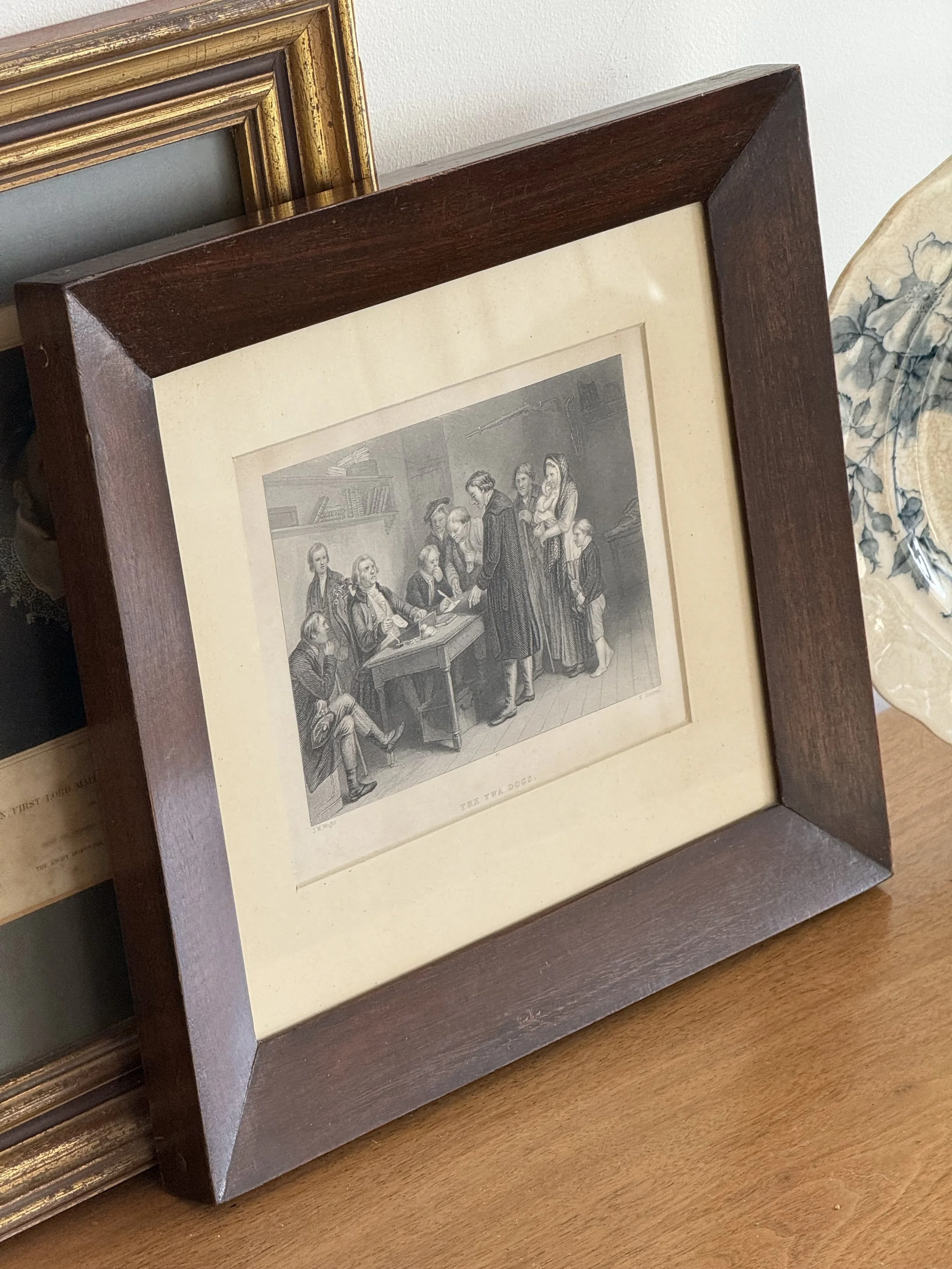 Image 1 of 7
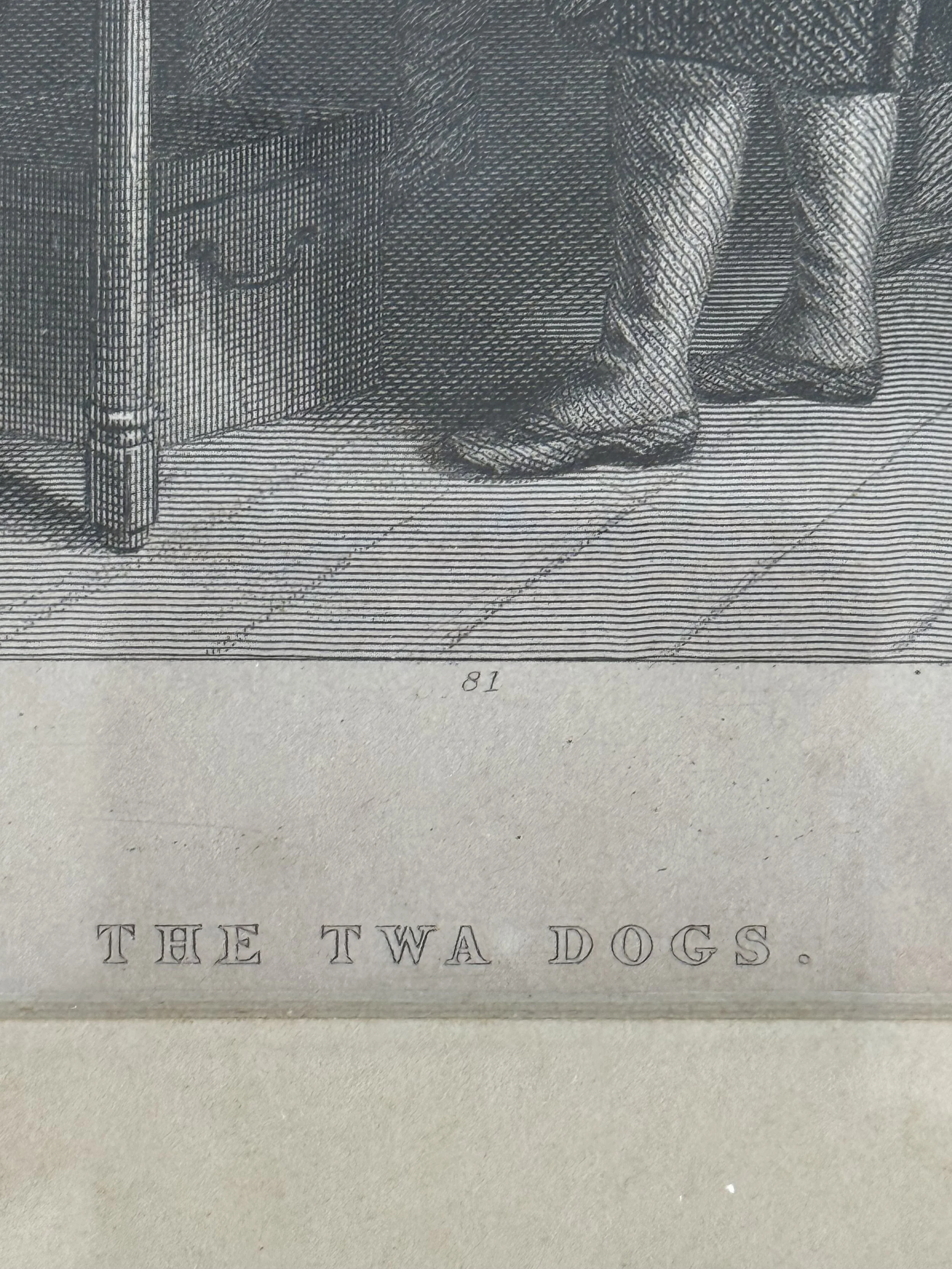 Image 2 of 7
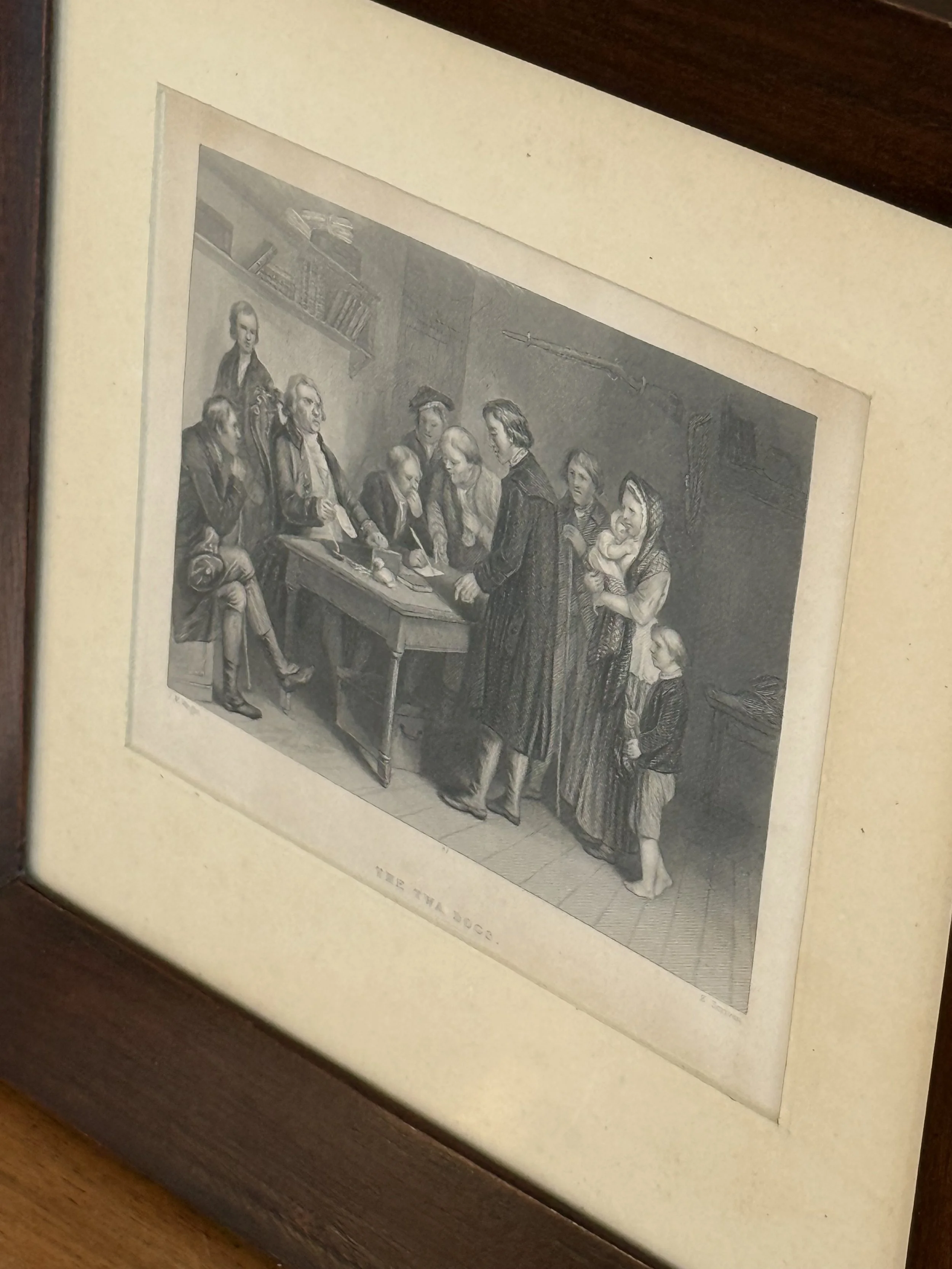 Image 3 of 7
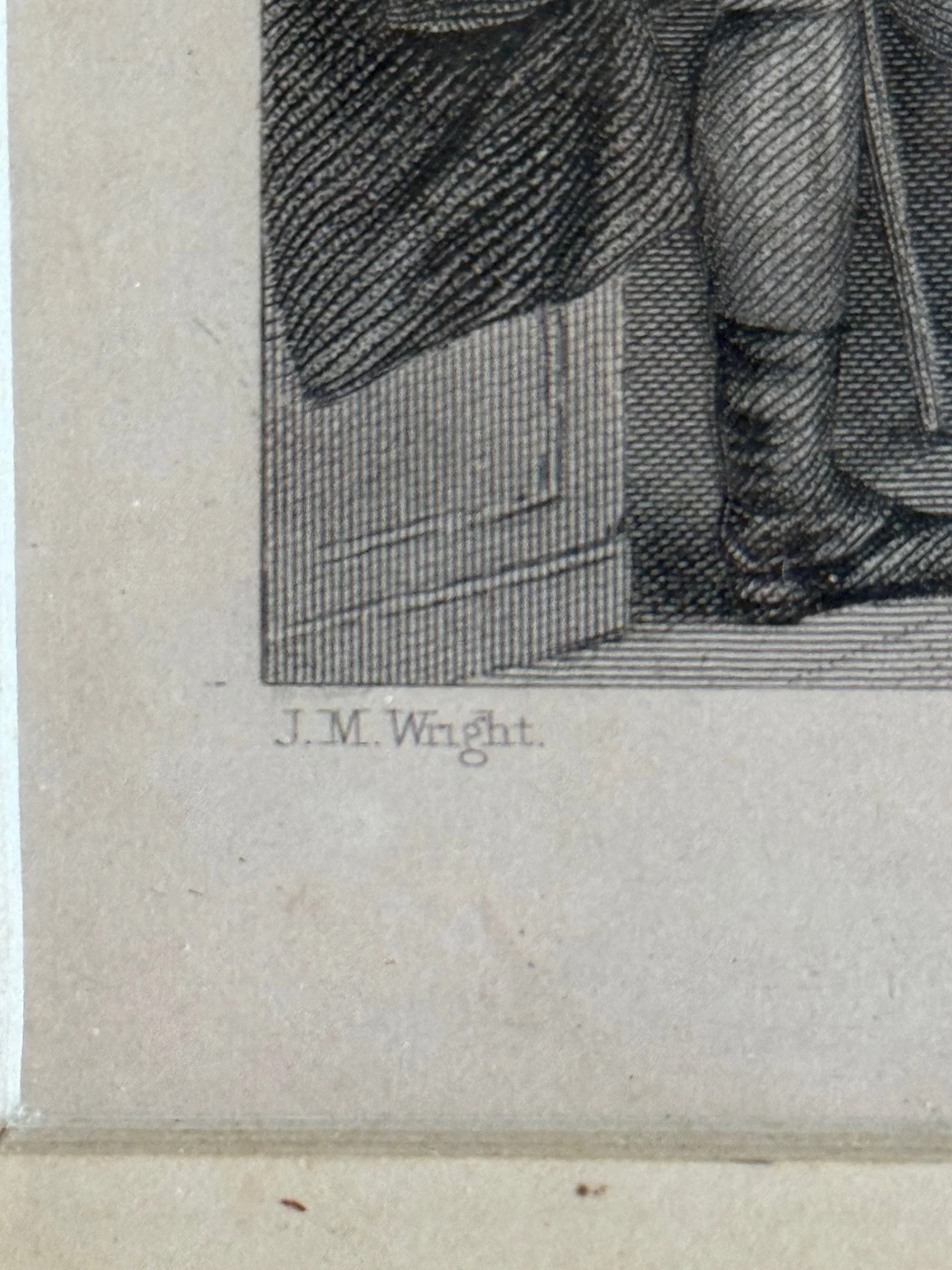 Image 4 of 7
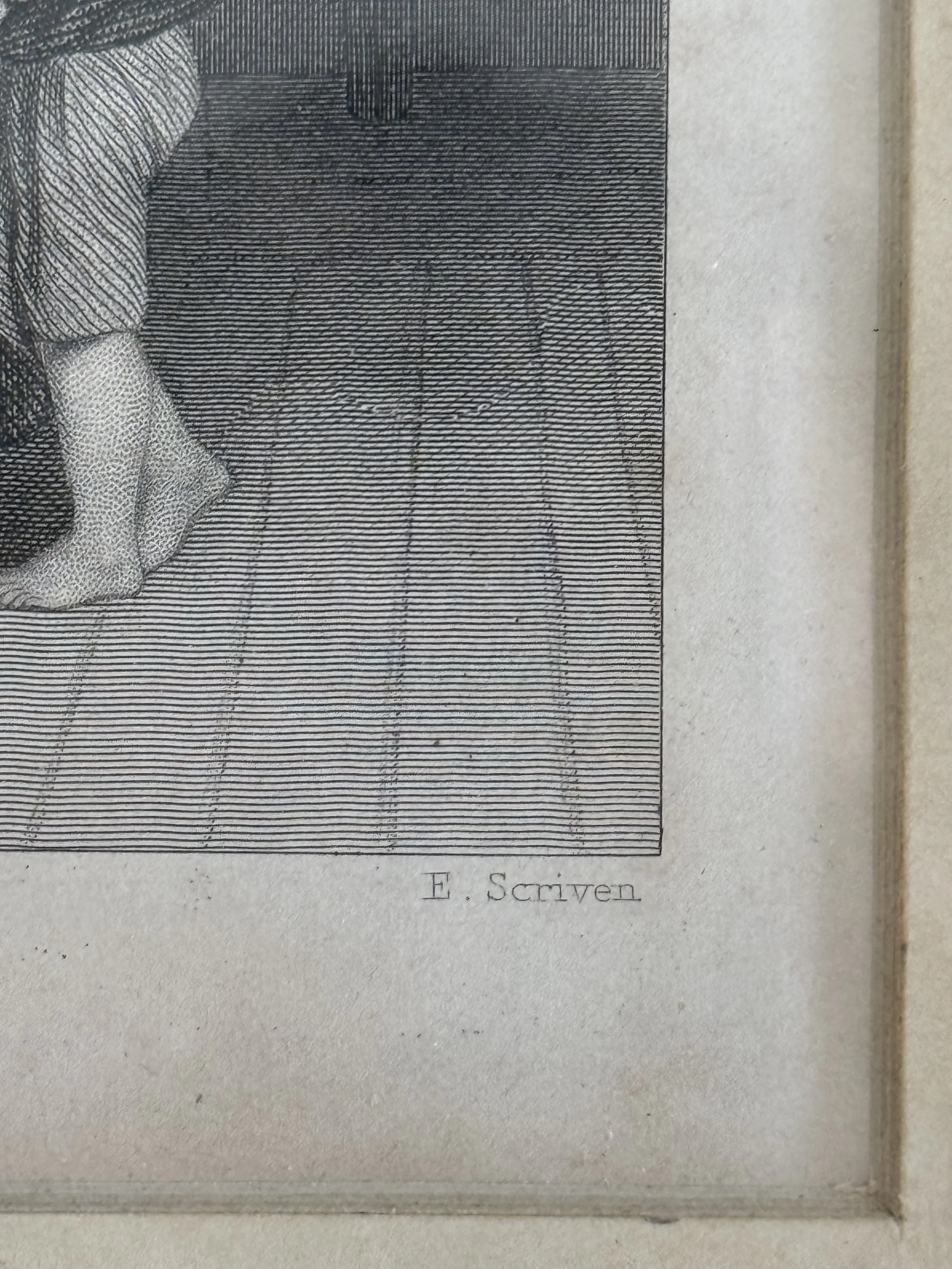 Image 5 of 7
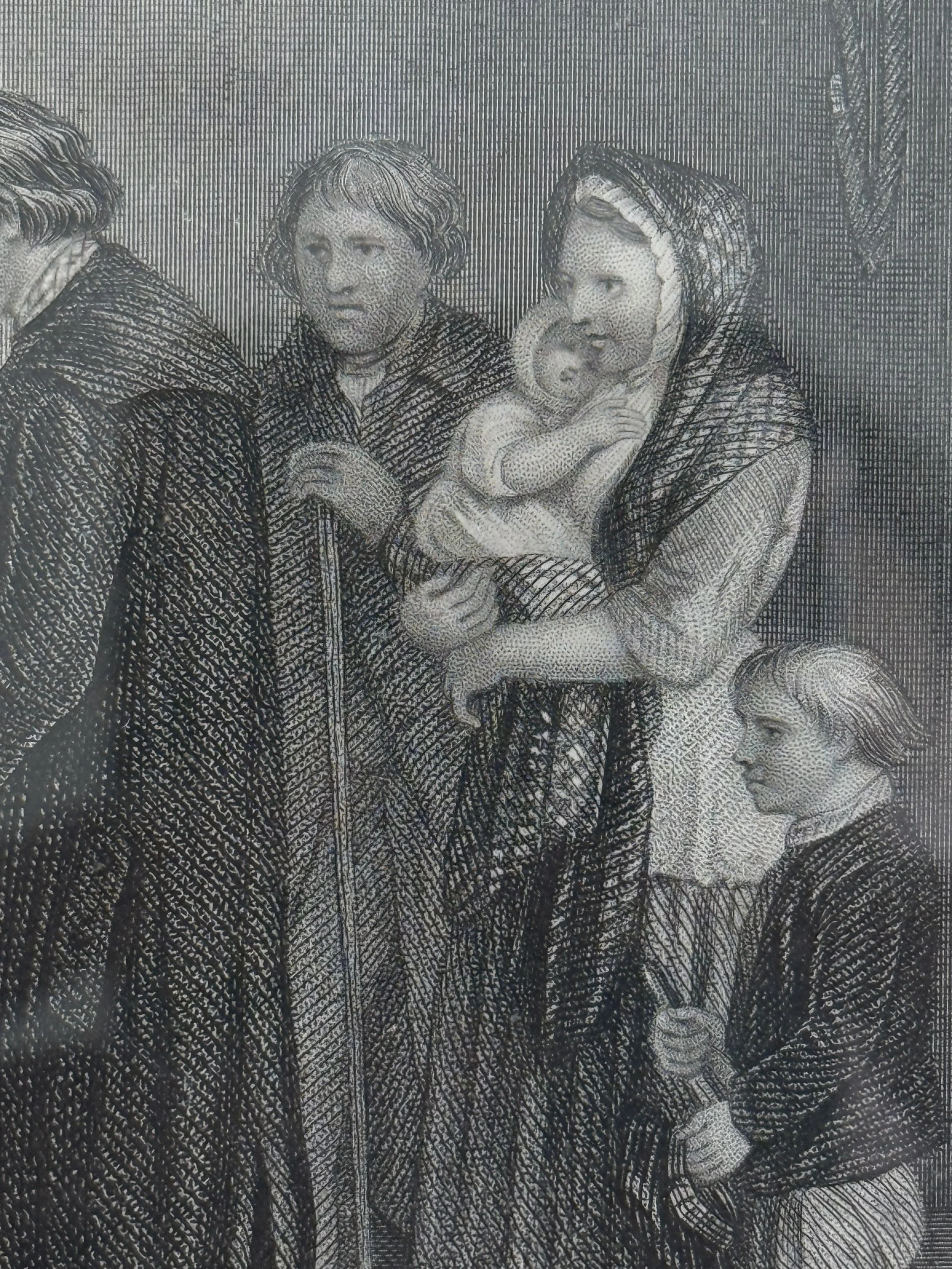 Image 6 of 7
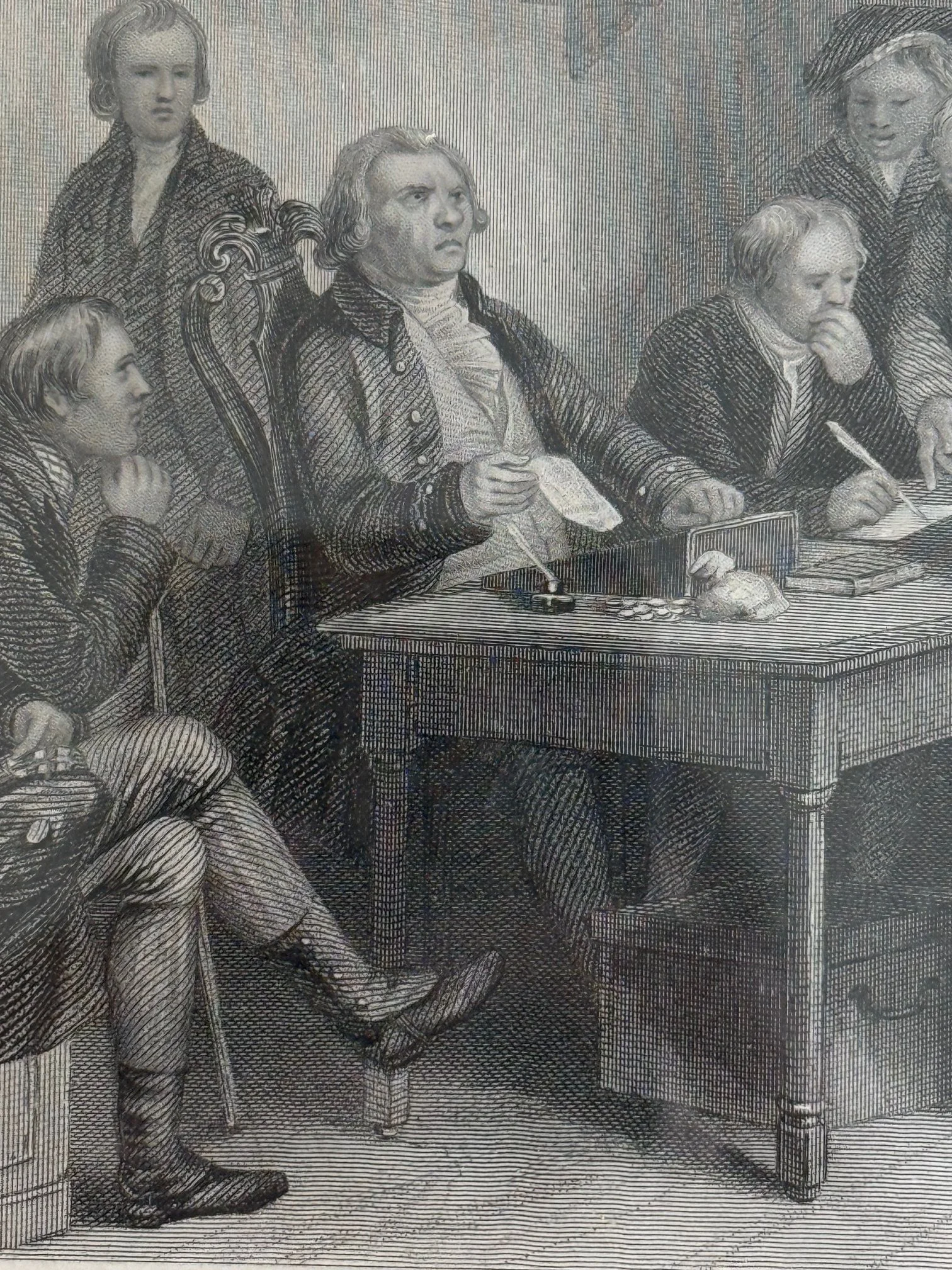 Image 7 of 7